Materials
What gold plated jewelry is, and how long plating lasts
What 14K gold plating is, how it compares with vermeil and solid gold, why it wears, and what dermatologists say about metal and skin.
Published September 15, 2026 · 5 minute read
- Karats: how much gold is in gold
- What plating is, in the words of the rules
- Plated, flashed, vermeil, sterling and solid
- Why plating wears, and where you see it first
- Habits that keep the color
- Metal and your skin
Karats: how much gold is in gold
Gold is measured in karats, and the scale runs to 24. The Federal Trade Commission puts it plainly: 24 karat is pure gold, and 14 karat means 14 parts gold and 10 parts other metal. The karat mark on a piece tells you the share of gold in the metal, not how much gold the piece weighs.
Gold at 24 karat is soft. A fine chain of 24 karat gold would stretch and kink with ordinary wear, and a thin ring would lose its shape. Mixing gold with other metals makes it harder. That is the reason everyday jewelry is usually 10, 14 or 18 karat even when it is solid gold all the way through.
The karat also sets the color. More gold means a deeper yellow, and the other metals in the mix can warm it toward rose or cool it toward white.
So when you compare a twenty dollar necklace with one that costs several hundred, you are rarely comparing two kinds of gold. You are comparing a piece that is gold through and through with a piece that has gold only on the surface. That surface is what plating is.
What plating is, in the words of the rules
Plating bonds a thin layer of gold to a piece made of another metal. The metal underneath carries the shape and the strength, and the gold carries the color.
The Federal Trade Commission sets the terms a jewelry label may use. Under its Jewelry Guides, 16 CFR 23.3, a piece may be described as gold plated or gold electroplated when all its significant surfaces carry an electroplating of gold at least 10 karat fine and at least 0.175 microns thick, about seven millionths of an inch, with the karat named in front of the term. That is where a phrase like "14K gold plated" comes from.
Most of our jewelry is 14K gold plating over brass, over copper on the CZ stacks, or over stainless steel on a few pieces such as the sideways cross and the twelve-ring set. The Details table on each piece names its base metal.
Seven millionths of an inch is a minimum, and it is very thin. Plating gives you the look of 14 karat gold at a fraction of its price, and it asks for some care in return, because a layer that thin can be worn away.
Plated, flashed, vermeil, sterling and solid
The words on jewelry labels are close enough to confuse, so here they are side by side.
| Term | What it means | Worth knowing |
|---|
| Gold plated or gold electroplate | A layer of gold over another metal | The FTC terms ask for at least 10 karat gold, at least 0.175 microns thick, with the karat named |
|---|
| Gold flashed or gold washed | A very thin electroplating of gold | The FTC says it wears away faster than gold plate |
|---|
| Vermeil | Gold plated over sterling silver | The base is a precious metal, not brass |
|---|
| Sterling silver | 92.5 percent silver | May be marked 925 |
|---|
| Solid gold | Gold alloy all the way through | Marked by karat, such as 14K |
|---|
Our sterling silver initial necklace sits between these rows. Its base is 925 sterling silver, and its finish is a white gold plating, so the color is a bright silver white and the metal underneath is still sterling silver.
The two things to look for on any label are the karat and the base. Together they tell you what you are paying for and what you will see if the surface ever wears.
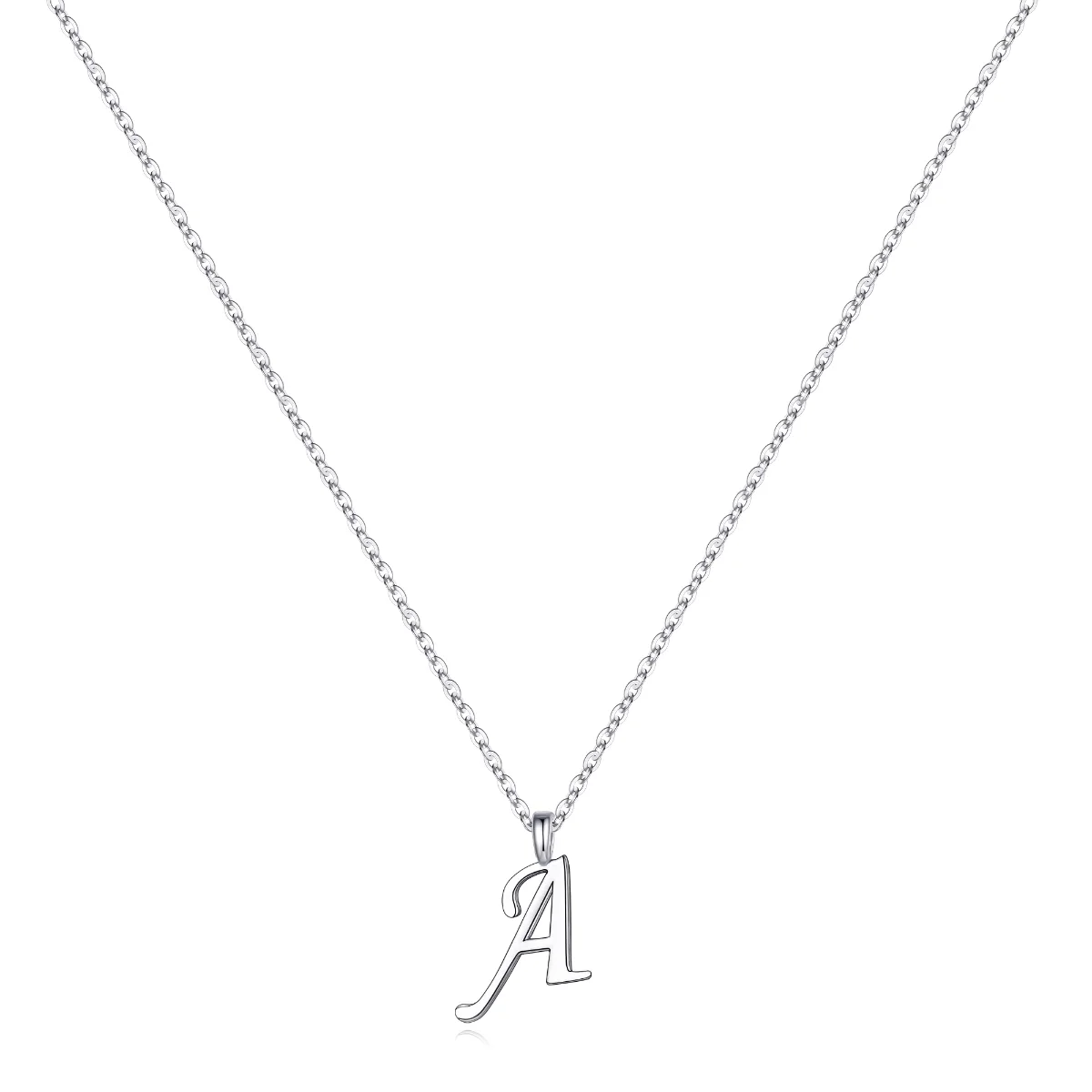
Yoosteel Sterling silver initial necklace
Sterling silver initial necklace · from $27.99

Why plating wears, and where you see it first
A plated layer is thin, so anything that rubs it or sits on it for hours slowly takes some away. How quickly depends on how the piece is worn, so no one can tell you in advance how many months it will last.
Friction is the main cause. A chain that slides against a collar, a clasp that turns every time you move your head, the inside of a ring pressed against a steering wheel: those are the places that lose color first. A pendant resting on bare skin wears more slowly than the links that touch fabric.
Liquids and what is dissolved in them are the other cause. Water with soap in it, pool water, sweat, lotion, sunscreen and perfume all sit in the small gaps between links and on the back of a pendant. Each one on its own does little in a day. Worn into a shower every morning, they add up.
When wear shows, it usually shows as a warmer or paler patch at the clasp or on the back of a charm, where the base metal starts to come through. The front of the piece often looks new for much longer.
Habits that keep the color
The care that helps plating most is simple, and it costs nothing.
Put your jewelry on last, after lotion, sunscreen, perfume and hairspray have dried, and take it off first. Take it off to shower, swim, exercise and sleep. Those four moments account for most of the water, sweat and friction a necklace ever meets.
A soft dry cloth after each wearing lifts the thin film of skin oil before it settles into the links. Store pieces dry and apart, each in its own pouch or compartment, so chains do not rub against each other in a dish.
Skip polishing cloths meant for solid silver. They work by removing a layer of the surface, and on a plated piece the surface is the part you want to keep. The same goes for dips, paste cleaners and toothpaste. Our jewelry care guide covers pearls, stones and stretch bracelets as well.
Some people react to metal in jewelry, and plated pieces are no exception. According to the American Academy of Dermatology, a nickel allergy often develops from wearing jewelry that contains nickel, and earrings, earring backs and watches are among the biggest culprits, although necklaces, rings and bracelets can trigger symptoms too.
For people who react, dermatologists suggest jewelry that is nickel-free or made of metals such as surgical-grade stainless steel, 18 to 24 karat yellow gold, sterling silver or platinum. MedlinePlus, from the National Library of Medicine, lists nickel in jewelry among the common causes of contact dermatitis and notes that the rash most often appears 24 to 48 hours after contact, so the piece that caused it is not always obvious.
If a piece leaves your skin red or itchy, take it off. The American Academy of Dermatology advises seeing a board-certified dermatologist for a rash that blisters, becomes infected, or comes and goes. Plating can wear through with time, so a piece you wore without trouble for months can behave differently later.
Each piece page names its base metal and its plating, and is held to the Yoosteel approach: nothing plated is described as solid gold.